
Most people think travel rewards are complicated, time-consuming, or only for people who travel constantly.
They’re not.
Point stacking is one of the simplest ways to travel more while spending less—and once you understand it, you’ll wonder why you didn’t start sooner.
I use this strategy every time I travel, whether it’s a weekend getaway, a family trip, or a longer vacation. The best part? You don’t need to change how you spend money—you just need to be intentional about how you book.
What Is Point Stacking?
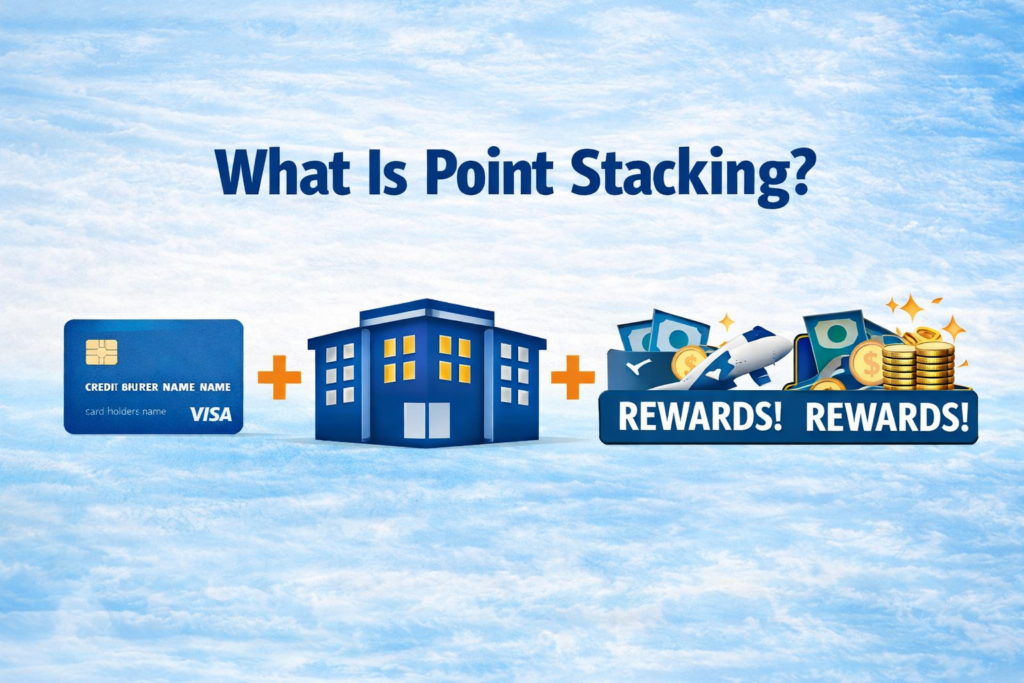
Point stacking means earning multiple types of rewards from one single booking.
Instead of choosing just one benefit, you layer:
Credit card points
Hotel loyalty points
(Sometimes) booking platform rewards
One trip. Multiple rewards.
Layer 1: Credit Card Points

The first layer of point stacking starts with how you pay.
When you use a travel rewards credit card, you earn points just for making the purchase. Many cards offer 2x–5x points on travel, including hotels, flights, and rental cars.
Popular travel rewards programs include:
Chase Ultimate Rewards
American Express Membership Rewards
Capital One travel cards
Why this matters:
You earn points even if the hotel is discounted
Points can be redeemed for future travel
Many cards include travel protections and perks
Why You Should NOT Use a Debit Card When Traveling
Using a debit card while traveling may feel safer because it’s “your money,” but it actually puts you at risk.
Your money is immediately at risk
Debit cards pull funds directly from your bank account. If your card is compromised, your money can be frozen during an investigation—sometimes for weeks.
Less fraud protection
Credit cards offer stronger fraud protection and faster dispute resolution. Debit cards often do not.
No travel insurance or protections
Most debit cards offer no trip delay, rental car, or baggage protection.
No points or rewards
Debit cards don’t earn rewards—meaning you pay full price and get nothing back.
Large holds from hotels and rental cars
Hotels and rental car companies often place large holds on debit cards, tying up hundreds of dollars
Layer 2: Hotel Loyalty Programs (This Is Where It Gets Good)

Hotel loyalty programs are free to join, and this is where consistent travelers win.
Popular programs include:
Hilton Honors
World of Hyatt
Marriott Bonvoy
You earn points for every stay—whether you pay with cash or points.
Why Sticking to One Hotel Brand Matters

Here’s the secret most travelers miss:
Consistency beats variety.
When you stick with one hotel brand, you:
Build points faster
Earn elite status sooner
Unlock better perks over time
What Hotel Status Can Get You

Depending on the brand and your level:
Room upgrades (sometimes suites)
Free breakfast or food credits
Late checkout
Early check-in
Bonus points on every stay
You don’t need luxury travel.
Even a few trips a year add up when you stay loyal to one brand.
Layer 3: Booking Platforms (Optional Bonus Layer)
Sometimes you can earn additional rewards by booking tours or short stays through platforms like:
Expedia
Hotels.com
GetYourGuide
This works best for:
Tours and excursions
One-night stays
Trips where elite perks don’t matter
If upgrades matter, booking direct with the hotel is usually better
A Simple Point Stacking Example

You book a hotel stay:
Pay with a travel rewards credit card → earn card points
Stay with your preferred hotel brand → earn hotel points
Have elite status → enjoy upgrades or free breakfast
One trip. Multiple benefits.
Does This Strategy Work for Everyone?

Short answer: Yes — if you use credit responsibly.
This works for:
Families taking 1–2 trips a year
Sports parents booking hotels
Weekend travelers
Couples planning one big trip
Solo or business travelers
You don’t need multiple cards.
You don’t need to travel monthly.
You just need to:
Pay your card in full
Stick with one hotel brand
Use credit instead of debit
If credit cards cause financial stress, this is something to work toward—not rush into.
Final Thoughts

Point stacking isn’t complicated—it’s intentional.
Using credit cards instead of debit cards, staying loyal to one hotel brand, and earning elite status over time can dramatically change how much you spend and how you travel.
If you’re already paying for trips, you might as well let those trips pay you back.
.